
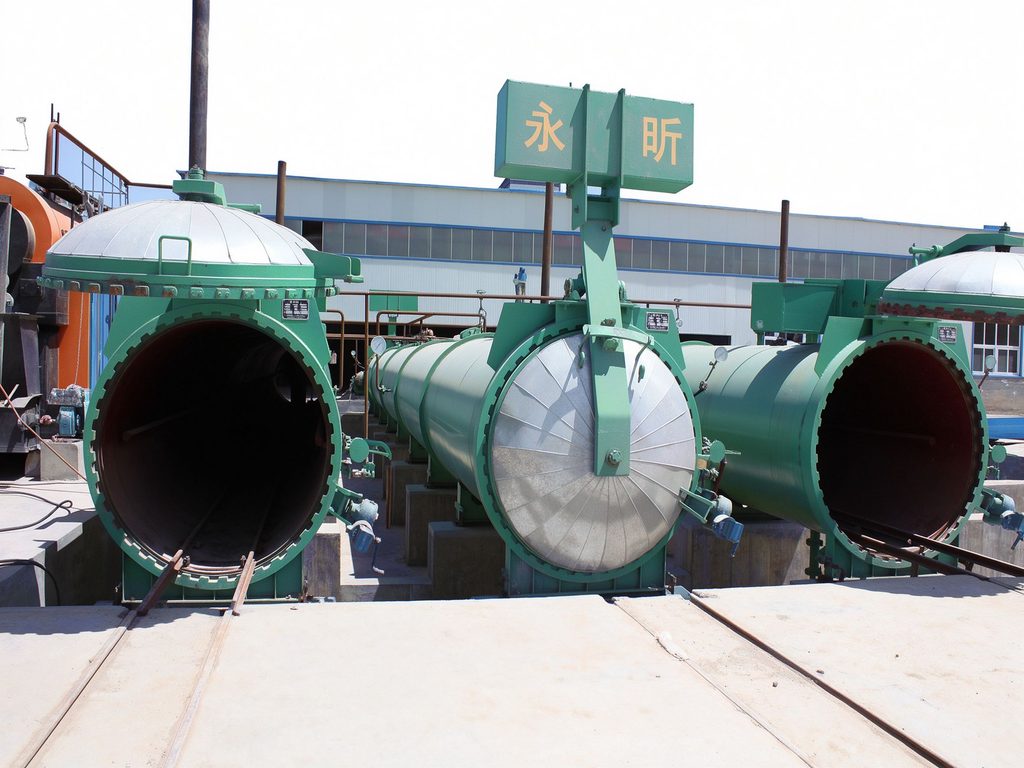
An autoclave, also known as a steam-curing kettle or reaction kettle, is a large pressure vessel with huge volume and heavy weight. It is widely used for autoclave curing of building materials such as aerated concrete blocks, concrete pipe piles, lime-sand bricks, thermal insulation asbestos boards, and high-strength gypsum. Our autoclaves are offered at favorable prices.
Function & Features of the Autoclave (Steam-Curing Kettle / Reaction Kettle):
The autoclave is a large pressure vessel with huge volume and heavy weight. It is widely used for autoclave curing of building materials such as aerated concrete blocks, concrete pipe piles, lime-sand bricks, fly-ash bricks, microporous calcium silicate boards, thermal insulation asbestos boards, and high-strength gypsum. It is also widely applicable to production processes requiring steam curing under pressure, including rubber products, wood drying and preservation treatment, heavy metal smelting, oil-impregnation of refractory bricks, composite glass curing, high-pressure treatment of chemical fiber products, high-temperature and high-pressure treatment of canned food, pulp cooking, cable vulcanization, fishing net setting, as well as the chemical, pharmaceutical and aerospace industries.
Main Performance & Structure of the Autoclave:
Materials of main pressure-bearing components: The shell and cover are made of 16MnR steel plate, which conforms to the requirements of GB6654. The body flange and cover flange are integrally forged from 16Mn, and the forgings conform to the requirements of JB4726-2000 Grade II, with ultrasonic non-destructive testing performed on each piece, meeting the corresponding requirements of JB/T4730.3-2005.
Door arrangement: Through type (covers at both ends) or end type (cover at one end).
Cover opening mechanism: Tooth-type quick-opening structure, driven manually, electrically, pneumatically or hydraulically, equipped with a safety interlock device for door opening and closing.