
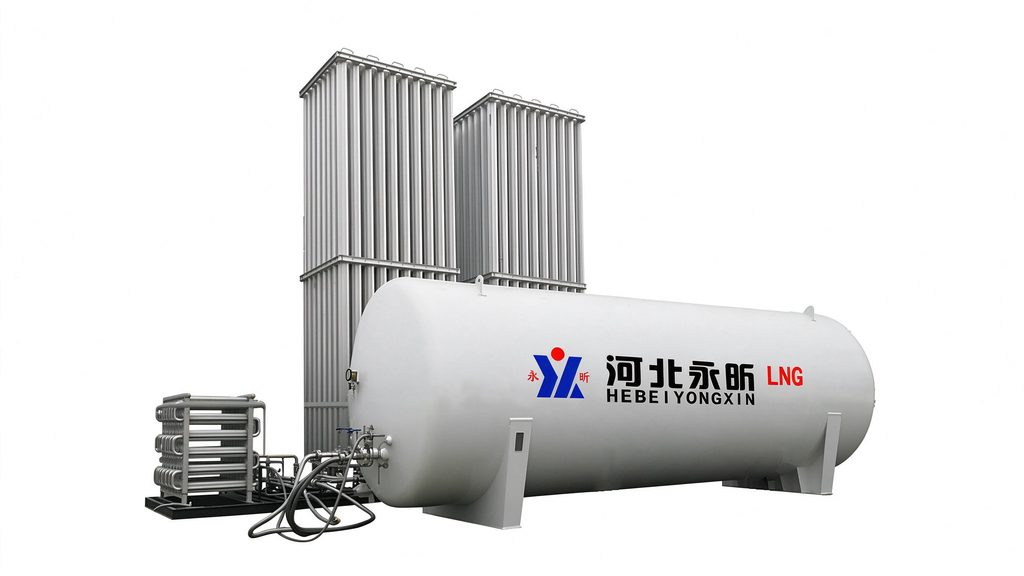
The LNG cryogenic storage tank is a type of low-temperature storage tank. The inner vessel, which is in direct contact with LNG, is made of austenitic stainless steel plate (S30408), while the outer shell is made of Q235B or Q345R steel.
Liquefied Natural Gas (LNG) is natural gas extracted from underground wells. After purification, it is compressed and heated, then cooled under the action of mixed refrigerants to remove heat, while nitrogen, carbon dioxide, solid impurities, sulfides and water are removed. It is then throttled and expanded into LNG in liquid form at -162°C, with its volume reduced to 1/600 of the gaseous state. Due to its special low-temperature properties, the physical characteristics of LNG differ greatly from those of ordinary natural gas, mainly reflected in its outstanding safety, applicability and environmental friendliness. The gas-to-liquid expansion ratio of LNG is approximately 600:1, offering high energy efficiency and convenient storage and transportation. An LNG storage tank is a low-temperature storage tank. The inner vessel, which is in direct contact with LNG, is made of austenitic stainless steel (S30408), while the outer shell is made of Q235B or Q345R. The interlayer is filled with perlite and evacuated under vacuum. Radial support is adopted between the inner and outer vessels, which not only enhances the support strength of the equipment but also allows the inner tank to have freedom of thermal expansion and contraction at low temperatures, preventing equipment damage caused by thermal stress.